Add Row
Add Element
cropper
update

Plumbing and Heating Chesterfield

Logo-plumbing and heating chesterfield
update
Add Element
update

CALL US

07966 884368

Add Element
update

EMAIL US

info@edsplumbing.co.uk

Add Element
update

OPEN 24 HOURS  OPEN

Add Element

Add Element
  • Insights Home
  • Topics
    • Eco-Friendly Plumbing Projects
    • Trade Secrets: Eco Edition
    • Smart Spend: Eco Product Picks
    • Smarter Heating to Slash Your Bills
    • Plumbing and Heating Success Stories
    • Sustainable Plumbing and Heating News
    • Innovative Heating Solutions
    • Sustainability Tips for Every Property
    • Plumbing and Heating Services
    • Emergency Plumbing
    • Boiler Installation Repairs and Servicing
    • Commercial Plumbing Solutions
    • Smart Underfloor Heating
  • Contact Us
  • Subscribe
Add Element
  • Peak Plumbing and Heating Insights on Facebook
    update
  • Peak Plumbing and Heating Insights on X.com
    update
  • Peak Plumbing and Heating Insights Google Business Profile
    update
  • update
  • update
  • Peak Plumbing and Heating Insights on Youtube
    update
  • Peak Plumbing and Heating Insights on Instagram
    update
  • All Posts
  • Eco-Friendly Plumbing Projects
  • Trade Secrets: Eco Edition
  • Smart Spend: Eco Product Picks
  • Smarter Heating to Slash Your Bills
  • Plumbing and Heating Success Stories
  • Sustainable Plumbing and Heating News
  • Innovative Heating Solutions
  • Sustainability Tips for Every Property
  • Plumbing and Heating Services
  • Emergency Plumbing
  • Boiler Installation Repairs and Servicing
  • Commercial Plumbing Solutions
  • Smart Underfloor Heating
September 06.2025
1 Minute Read

Underfloor Heating Installation Chesterfield: Avoid Costly Errors

Did you know that a staggering 35% of UK homeowners regret not choosing professional underfloor heating installation? If you’re based in Chesterfield, making the right floor heating decision today can save you thousands in energy bills and headaches tomorrow. Whether you want a cosier living space or are looking for an efficient heating system, this guide will ensure your investment pays off. Avoid costly errors, maximise comfort, and turn your Chesterfield home into the warm haven you deserve!

Why Underfloor Heating Installation in Chesterfield Is a Smart Investment

  • Discover why 35% of UK homeowners regret skipping professional floor heating

  • Understand the benefits of a seamless underfloor heating system

  • Practical examples of improved efficiency and lower energy costs

Choosing underfloor heating installation Chesterfield isn’t just about keeping your toes toasty—it’s a smart move for long-term home efficiency. Many homeowners who’ve opted for professional heating installation now enjoy lower energy bills, better air quality, and increased property values. The right floor heating system distributes warmth evenly throughout the room, eliminating chilly corners and the dry blasts of traditional radiator systems.

In Chesterfield, where winter chills can bite, having a reliable underfloor heating system means comfort comes standard. This system runs at lower temperatures but delivers better results, especially when paired with a modern heat pump . In fact, homeowners often report up to a 25% reduction in heating bills compared to conventional heating methods. If you’re tired of patchy warmth and high energy costs, investing in a high-quality underfloor heating installation is a proven way to boost your family’s comfort and save money year after year.

modern Chesterfield home interior with underfloor heating schematic, satisfied homeowners discussing energy bills, elegant open-plan living area with sunlight streaming through large windows

What You Need to Know Before Choosing an Underfloor Heating System

  • Types of underfloor heating systems: electric vs. warm water underfloor heating

  • Evaluating your property for floor heating installation

  • Chesterfield-specific considerations for heating installation

The first step to a successful underfloor heating installation Chesterfield is knowing your options. There are two main types: electric underfloor heating and warm water underfloor heating . While both can be tailored to suit local homes and weather, each system has unique advantages and ideal use cases. To make the right choice, you’ll want to assess your property’s insulation, subfloor condition, and the rooms where you plan to install floor heating.

Chesterfield’s mix of period properties and new builds calls for careful evaluation. For example, electric systems are often chosen for smaller rooms or retrofits because they’re quick to install and require minimal upheaval. By contrast, water underfloor heating (also called warm water underfloor heating systems ) is best for larger spaces or new builds due to its energy efficiency and compatibility with renewable heat sources like heat pumps . Either way, consulting a certified heating engineer ensures your chosen system runs efficiently and delivers long-term value.

Comparing Underfloor Heating Systems: Electric vs. Warm Water

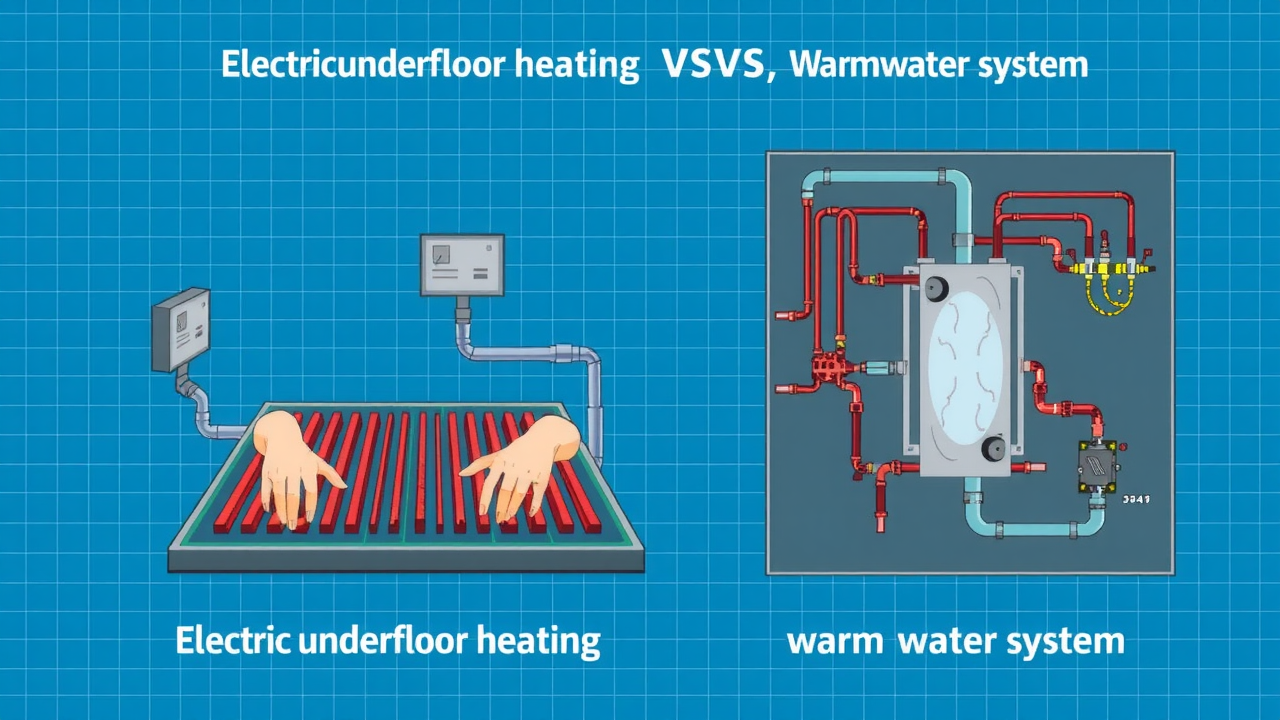
Comparing electric underfloor heating systems with warm water underfloor heating is crucial before installation. Electric systems are generally easier and faster to fit—perfect for single rooms or retrofits. Warm water systems, however, spread heat with lower running costs, making them ideal for whole-house projects and larger areas. Each has distinct installation, running, and maintenance requirements, so your floor construction, heating needs, and long-term goals should all be considered.

Speak with a heating engineer who understands Chesterfield’s unique housing landscape. This professional can assess whether your home is more suited to the quick warmth of electric systems or the energy efficiency of water-based heating. Don’t forget to consider heat pump compatibility if you’re planning for low-carbon future upgrades.

Key Differences Between Electric and Warm Water Underfloor Heating Systems

Feature

Electric Underfloor Heating

Warm Water Underfloor Heating

Installation Speed

Fast—ideal for single rooms, retrofits

More involved—recommended for new builds & large spaces

Upfront Cost

Lower (typically)

Higher initial investment

Running Costs

Higher (due to electricity rates)

Lower (when used with efficient boilers/heat pumps)

System Thickness

Very thin; suitable for most floors

Needs more space; sometimes requires thin screed

Maintenance

Minimal

More complex—annual checks advised

Compatibility

Any room, small to medium spaces

Whole-house, large open areas

technical diagram comparing electric underfloor heating vs warm water system, blueprint-style, clear system elements

Core Benefits of Professional Underfloor Heating Installation Chesterfield

  • Enhanced comfort and even heat distribution

  • Increased home value in the Chesterfield market

  • Energy efficiency through modern heating systems and compatible heat pumps

  • Maintenance requirements and product durability

Opting for a professional underfloor heating installation Chesterfield means you enjoy warmth from the ground up—literally. Uniform heat distribution is a major advantage. Unlike traditional radiators that create hot spots near walls and cold patches in the middle, underfloor heating spreads gentle, even warmth throughout your living space . This increases comfort and allows you to keep your rooms at lower temperatures, which boosts energy efficiency and keeps energy bills in check.

Professional installation also increases your property’s value—an attractive prospect in Chesterfield’s robust housing market. Efficient heating systems are a top “wish list” feature for buyers. By linking your underfloor heating system with modern heat pumps , you make your home even greener and future-proof. Remember, working with a certified heating engineer ensures warranties stay intact, reduces long-term maintenance headaches, and extends product durability for years to come.

cosy family home couple enjoying underfloor heated floors barefoot, spacious kitchen sunlit

Step-by-Step Guide to Underfloor Heating Installation in Chesterfield

  1. Initial property inspection by certified heating engineer: The process starts with a thorough property assessment. A qualified heating engineer checks subfloor type, insulation, and recommends the best heating system for your needs.

  2. Designing the underfloor heating system layout: Each room is measured and the most efficient piping/electrical grid plan is created. This ensures even coverage and system longevity.

  3. Choosing between electric or warm water underfloor heating systems: Based on inspection insights, you and your installer select the right system for your lifestyle and budget.

  4. Laying insulation and installing thin screed if required: Prepping the floor is essential. Insulation minimises heat loss, while thin screed creates a stable base to secure the pipes or heating mats.

  5. System testing and finalising the heating installation: The heating system is rigorously tested before the final screed/panel goes on. This step safeguards against leaks or electrical issues for flawless operation.

By following these steps and trusting experts with your underfloor heating installation Chesterfield , you eliminate costly guesswork and future problems. Proper preparation—especially with insulation and screed—means your system will provide consistent warmth and cost-savings for many winters to come.

Avoiding Expensive Mistakes During Underfloor Heating Installation

  • Common issues from poor heating installation practices

  • Ensuring compatibility between heat pumps and underfloor heating systems

  • The importance of working with accredited professionals in Chesterfield

Skimping on professional help when installing underfloor heating is a very costly gamble. Common pitfalls include improper insulation, incompatible heat pumps , and poorly planned layouts. These mistakes lead to cold patches, system faults, and energy bills that spiral out of control. For example, not checking for “flow screed” or “thin screed” requirements can leave your pipes exposed to damage or ineffective heat transfer.

Avoid regret by insisting on a heating engineer who is experienced, based in Chesterfield , and certified. They’ll know local regulations, have direct access to support, and often catch small issues before they snowball into big, expensive repairs. Remember:

“Cutting corners on your underfloor heating installation can inflate energy bills by up to 25%.”

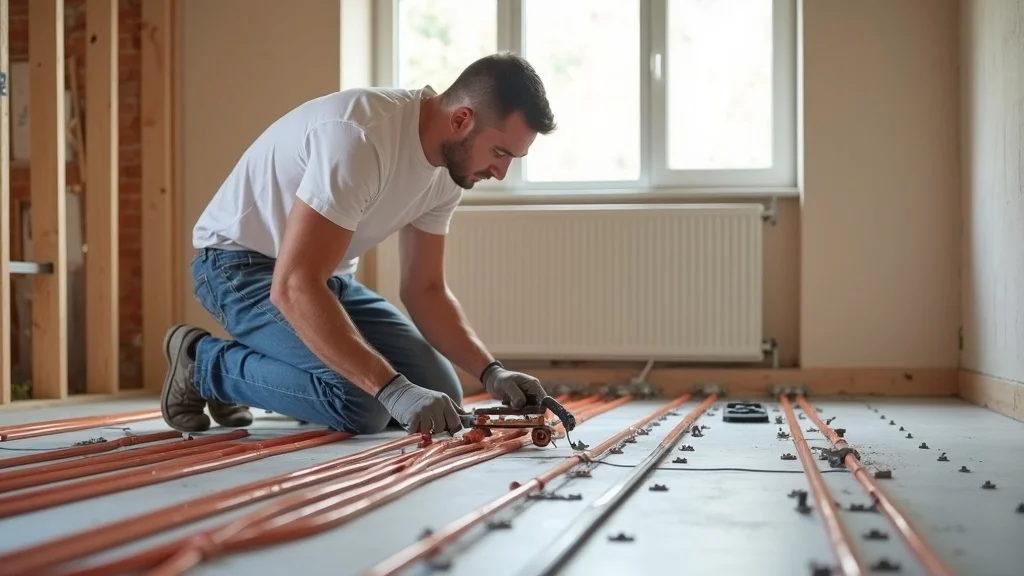
heating engineer inspecting underfloor heating pipes for errors during installation, detailed site under construction

How Much Does Underfloor Heating Installation in Chesterfield Cost?

Typical Price Ranges for Underfloor Heating Installation Chesterfield – Electric & Warm Water

System Type

Cost per Room (Typical)

Approximate Cost per m²

Best For

Electric Underfloor Heating

£800 – £1,500

£50 – £80

Small rooms, retrofits

Warm Water Underfloor Heating

£1,200 – £2,500

£70 – £130

Larger rooms, new builds, whole house

Costs for underfloor heating installation Chesterfield can vary widely based on system type, floor area, and the amount of prep work required. For electric underfloor heating, prices often start at £800 per room . Warm water underfloor heating requires a larger investment but can be as low as £70 per square metre —well worth it for larger projects with future heat pump upgrades in mind.

Don’t just chase the cheapest quote; opt for quality materials and certified engineers. Investing a little more upfront ensures your heating system runs efficiently and avoids nasty surprises later on.

Factors Influencing Floor Heating Costs

  • Property size and room type

  • Choice of underfloor heating system

  • Complexity of heating system design

  • Potential upgrades with heat pump technology

The cost of installing underfloor heating hinges on multiple factors. Bigger homes require more materials and longer installation times. Kitchens and bathrooms might need extra insulation, or even flow screed for tile stability. Electric systems are faster for small areas, while water underfloor heating becomes cost-effective for larger spaces. Heat pump integration—the gold standard for eco-homes—can increase upfront costs, but these savings on running costs add up over time. Always get a detailed, room-by-room quote for your specific Chesterfield property.

Chesterfield couple reviewing underfloor heating installation quotes in home office, with subtle heating icons on laptop

Evaluating the Right Heating System for Your Chesterfield Home

  • Assessing insulation and subfloor requirements

  • Choosing between floor heating and traditional radiators

  • Leveraging efficient heating solutions with modern technology

Optimise your comfort and savings by choosing the right heating system for each room. Modern underfloor heating systems work best when paired with excellent insulation and a well-prepared subfloor. Some older Chesterfield homes may require extra insulation or thin screed to meet today’s energy standards.

Deciding between floor heating and traditional radiators? Underfloor heating is often more energy efficient, especially when used with smart thermostats and renewable heat sources. Plus, it looks better and frees up wall space for interior design. Always ask your heating installer about the latest efficient heating options and the long-term benefits of integrating with tech like smart heating controls , wireless thermostats, or a compatible heat pump.

Top Underfloor Heating Brands and Products Available in Chesterfield

  • Review of popular underfloor heating brands

  • Product warranties and long-term service

  • Integration with smart home heating systems

Chesterfield homeowners can choose from a wide range of well-regarded brands offering quality underfloor heating systems . Leading names like Warmup, Polypipe, Nu-Heat, and Uponor deliver reliable performance, solid warranties, and innovative solutions. These systems can be efficiently integrated into smart home setups, letting you control floor heating via mobile apps or voice assistants.

Look out for products that come with extended warranties—many offer up to 25 years on pipes and heating mats. Trusted installers based in Chesterfield typically endorse these brands for hassle-free maintenance and after-sales support. Make sure your system is compatible with your long-term plans, including heat pump or solar energy upgrades.

modern underfloor heating control panel, homeowner adjusting temperature, smart tech in minimalist setting

Expert Tips for a Smooth Heating Installation Process

  1. Hire a local heating engineer with Chesterfield experience

  2. Confirm all materials are compliant and high-quality

  3. Schedule pre- and post-installation inspections

  4. Follow manufacturer guidelines for underfloor heating systems

Smooth, problem-free underfloor heating installation is possible when you work with the right team. Always start with a local, certified heating engineer who knows Chesterfield properties and regional building regulations. Double-check that all insulation, pipes, and system controls meet UK quality standards—don’t cut corners on materials.

Schedule both pre- and post-installation checks. This protects your warranty and ensures your system is running safely and efficiently. Insist your installer follows the manufacturer’s detailed guidelines; this helps guarantee efficient heating, longevity, and access to long-term support. As one expert says:

“Partner with a professional heating installation team—peace of mind is worth every penny.”

People Also Ask About Underfloor Heating Installation Chesterfield

How much to get underfloor heating installed?

  • The price for underfloor heating installation Chesterfield typically ranges from £800 to £2,500 per room, depending on the system and area size.

The installation cost can vary by system type and room size. Electric systems are generally cheaper and faster to install than water underfloor heating, but ongoing running costs may be higher. Always request a tailored quote based on your home’s unique requirements.

How much would it cost to install floor heating?

  • Installing floor heating can cost between £70 to £130 per square metre when choosing warm water underfloor heating systems.

The final price depends on whether you choose electric or warm water underfloor heating, room preparation needs, and your chosen installer’s rates. Remember to factor in any upgrades like heat pump integration, which can influence your long-term energy savings.

What is the downside of underfloor heating?

  • Downsides may include higher upfront investment, installation time, and the need for professional expertise to avoid system faults.

While underfloor heating brings many comfort and energy savings, it requires expert installation and can take longer to fit than traditional radiators. Choosing experienced professionals is vital to avoid costly mistakes and ensure your heating system runs smoothly for years.

How much should I pay for underfloor heating?

  • The total cost for a quality underfloor heating installation Chesterfield project may range from £1,500 up to £8,000 for larger properties.

Budget for both the installation and any essential upgrades, like improved insulation or smart heating controls. Investing in quality now brings decades of reliable warmth, lower bills, and strong property value.

Quick Reference: Underfloor Heating Installation Chesterfield FAQs

  • How long does underfloor heating installation take?
    Most projects are completed in 2–5 days, depending on floor type and system complexity.

  • Can I link my heat pump to my floor heating?
    Absolutely—modern underfloor heating systems are designed to work with heat pumps for maximum energy efficiency.

  • Is a heating engineer required for every project?
    Yes, professional expertise ensures safe, efficient, and warranty-compliant installation in Chesterfield homes.

  • What warranty covers an underfloor heating system?
    Top brands offer warranties from 10 to 25 years for piping/mats, with at least 2 years cover for controls and electronics.

Key Considerations When Selecting a Heating Engineer in Chesterfield

  • Certifications and experience

  • Local reputation and customer reviews

  • Aftercare and ongoing support for underfloor heating systems

It pays to do your homework before selecting your Chesterfield heating engineer. Look for proof of accreditations, positive reviews, and clear explanations about aftercare. A local specialist not only knows the ins and outs of local properties but also provides faster support if issues arise later. Quality aftercare means your underfloor heating system will continue running efficiently year after year.

Take the Next Step Towards Efficient Underfloor Heating Installation Chesterfield

  • Contact leading providers for a personalised quote

  • Book a heating system assessment to discover your best-fit solution

Ready to enjoy year-round comfort and long-term savings? Reach out to trusted Chesterfield installers who specialise in underfloor heating systems . A local engineer can tailor a solution to your needs—guaranteeing a flawless fit and maximum efficiency for your home.

Enhance Home Comfort and Savings With Underfloor Heating Installation Chesterfield

“Efficient underfloor heating installation in Chesterfield delivers comfort, value, and peace of mind for year-round warmth.”

Start your journey to a cosier, more energy-efficient Chesterfield home today. Demand professional expertise, ask the right questions, and invest in a high-quality system—your future self (and heating bills) will thank you!

Speak to a certified local heating engineer, request a personalised quote, and discover how professional underfloor heating installation in Chesterfield can upgrade your home comfort, efficiency, and property value today.

Sources

  • UK Department for Energy Security and Net Zero – https://www.energy.gov.uk/

  • Which? Underfloor Heating Guide – https://www.which.co.uk/reviews/home-heating-systems/article/underfloor-heating-guide-aIog34k8T11k

  • Checkatrade: Underfloor Heating Cost Guide – https://www.checkatrade.com/blog/cost-guides/underfloor-heating-cost/

  • Homebuilding & Renovating: Underfloor Heating – https://www.homebuilding.co.uk/advice/underfloor-heating

When considering underfloor heating installation in Chesterfield, it’s essential to choose a reputable and experienced installer to ensure optimal performance and avoid costly errors. One such provider is DD Flow , a Chesterfield-based company specialising in liquid screed, floor preparation, underfloor heating, and concrete pumping. With over 10 years of experience, they offer comprehensive services, including surface preparation and screeding, ensuring a high-quality finish for your underfloor heating system. ( ddflow.co.uk )

Another trusted option is TN Renewables , offering expert underfloor heating solutions for homes and businesses in Derbyshire. They emphasize energy efficiency and cost savings, providing professional installation by certified technicians, along with comprehensive warranties and ongoing support. ( tnrenewables.co.uk )

For a broader selection, Checkatrade lists several underfloor heating specialists in Chesterfield, complete with customer reviews and ratings. This platform allows you to compare services and choose an installer that best fits your needs. ( checkatrade.com )

By selecting a qualified and experienced installer, you can ensure that your underfloor heating system is installed correctly, providing maximum comfort and efficiency for your Chesterfield home.
Smart Underfloor Heating

12 Views

0 Comments

Write A Comment

*
*
Related Posts All Posts
12.05.2025

Choosing the Right Underfloor Heating System: Advice from Industry Professionals

Imagine stepping onto warm floors during a chilly morning—comfort that transforms your daily routine. Choosing the best underfloor heating system isn't just about technology; it’s about creating a cozy, energy-efficient home. Whether you are building new or retrofitting existing spaces, the right system can bring lasting warmth and savings. Industry experts like Jamie Alberts from Peak Underfloor Heating Ltd share their insights, helping you make an informed, heartfelt choice for your household. What You'll Learn Key factors to consider when selecting the best underfloor heating system Differences between underfloor heating and traditional radiators Expert insights on installation, efficiency, and maintenance Common misconceptions and how to avoid them Practical tips for homeowners and builders Understanding the Best Underfloor Heating System: An Overview Jamie Alberts, of Peak Underfloor Heating, explains, "The ethos of underfloor heating is that the floor itself becomes the radiator, providing a more even and efficient heat distribution compared to traditional systems." The best underfloor heating system operates on a simple yet powerful principle: instead of heating the room through a radiator on the wall, the entire floor surface radiates heat evenly. This creates a comfortable environment by warming from the ground up and significantly improves energy efficiency. Central to underfloor heating effectiveness is the concept of thermal mass — the capacity of the floor material, typically concrete or screed, to absorb, store, and evenly radiate heat. Insulation beneath the heating pipes is essential as it prevents heat loss downward, ensuring warmth reaches the living space effectively. Systems typically operate at lower water temperatures—between 40 to 50 degrees Celsius—yet deliver a pleasantly steady warmth, contrasting with the higher temperatures required by traditional radiators. Definition and basic principles of underfloor heating Thermal mass and insulation importance Typical temperature ranges and energy efficiency Comparing Underfloor Heating with Radiators While traditional radiators heat small zones quickly, their warmth dissipates faster and tends to create uneven temperature zones. Radiators require water temperatures as high as 60 to 70 degrees Celsius to function efficiently, resulting in more energy consumption. On the other hand, the best underfloor heating system uses the whole floor’s surface to gently emit heat, achieving a more even ambient temperature with water running at much lower temperatures. Although the heat-up time is slower, thermal mass ensures consistent warmth that lasts longer after the system switches off. Another advantage of underfloor systems is the space-saving benefit; without bulky radiators on walls, homeowners enjoy greater freedom in room design and furniture placement. Underfloor heating also contributes to better air quality by reducing dust circulation, as it doesn’t rely on convection currents like radiators. Heat-up and cool-down times Space-saving benefits Running costs and energy consumption Comfort and air quality considerations For a more detailed breakdown of how to select the most suitable underfloor heating system for your specific property type and needs, you might find this comprehensive homeowner's guide to underfloor heating systems especially useful. It covers practical considerations and common scenarios faced by UK homeowners. Expert Insights on Choosing the Best Underfloor Heating System Jamie Alberts shares, "We use LK International’s systems, a Swedish company with over a century of experience, because their technology allows us to run flow temperatures as low as 30 degrees, which significantly reduces energy bills." A key to selecting the best underfloor heating system lies in partnering with trusted suppliers who understand the technology and provide robust technical support. Jamie Alberts, of Peak Underfloor Heating Ltd, relies on LK International, a Swedish manufacturer with 110 years of industry experience, who specialize in advanced low-temperature flow systems. These modern systems are designed to function optimally at flow temperatures as low as 30 degrees Celsius, which is considerably cooler than most UK underfloor heating systems. This technological edge makes them particularly compatible with heat pumps—a sustainable heating solution expected to dominate future installations, especially with carbon regulations looming. Importance of supplier relationships and technical support Advantages of modern low-temperature systems Compatibility with heat pumps and sustainable energy solutions Installation Considerations for the Best Underfloor Heating System When deciding on the best underfloor heating system, installation methods differ significantly depending on whether your home is a new build or a retrofit. For new builds, installing pipes within insulated screed floors is the standard practice, optimizing thermal mass and energy efficiency. Insulation boards beneath prevent heat loss, and the screed evenly distributes warmth. In retrofit situations—such as existing timber joisted floors—specialized systems using aluminum heat spreader plates or pre-routed chipboard are used. These systems are thinner and allow fitting under existing floor finishes but often require slightly higher operating temperatures. Proper placement of the manifold—a central point distributing heated water to various pipe loops—is crucial. It aids zoning and provides individual control, allowing tailored room temperatures. Additionally, pipework that passes through unheated spaces is sleeved with insulating conduit to prevent unwanted heat loss. Jamie Alberts notes that professional installation requires specific tools such as pipe decoilers for coil management and staple guns to fasten pipework securely—aiding efficiency and ensuring durability without excessive physical strain. New build versus retrofit options Floor construction types and their impact on system choice Manifold placement and pipe insulation techniques Specialist tools and equipment required Managing Heat Distribution and Control A sophisticated thermostat system is fundamental to maintaining comfort with the best underfloor heating system. Unlike radiators which cycle on and off in blocks of time, underfloor heating operates to maintain a steady, constant temperature throughout the day by switching on only when temperatures dip below a set point. Temperature control is done room-by-room through insulated manifolds and electronic thermostats. This setup ensures zones can be independently adjusted, enhancing comfort and cutting energy waste. The floor’s thermal mass means heat does not cool rapidly, so even short heating cycles keep rooms warm effectively. To prevent heat escaping into non-heated areas such as closets or floor voids, pipes running through those zones are insulated, maintaining efficiency and preventing unnecessary energy usage. Thermostat settings and room-by-room control Avoiding heat loss in non-heated areas Maintaining a consistent temperature for comfort and efficiency Common Misconceptions About the Best Underfloor Heating System Myth: Underfloor heating is always on and costly. Fact: It operates with precise thermostatic control to save energy and cost. Myth: Installation is prohibitively expensive. Fact: While initial costs can be higher, long-term savings on energy bills and space efficiency often outweigh the upfront investment. Jamie Alberts emphasizes, "People often think underfloor heating means the system is on 24/7. In reality, depending on thermostat settings, it may only be active for brief periods throughout the day to maintain comfort and avoid unnecessary running costs." Practical Tips for Homeowners Considering the Best Underfloor Heating System Assess your floor type and insulation before choosing a system to optimize performance. Consult with experienced professionals like Jamie Alberts who provide tailored solutions based on your home’s specifics. Consider future-proofing your heating system by ensuring compatibility with renewable energy sources such as heat pumps. Plan for routine maintenance and seasonal adjustments to keep your system running efficiently year-round. People Also Ask What is the most efficient underfloor heating system? How long does underfloor heating take to warm a room? Can underfloor heating be installed in existing homes? Is underfloor heating compatible with heat pumps? What maintenance does underfloor heating require? Key Takeaways The best underfloor heating system balances efficiency, comfort, and cost-effectiveness. Modern low-temperature systems reduce energy consumption and enhance sustainability. Proper installation and zone control are essential for optimal performance and savings. Strong supplier partnerships provide vital technical support and reliability. Underfloor heating suits both new builds and retrofit projects as a smart investment. Conclusion Jamie Alberts concludes, "Choosing the right underfloor heating system is about understanding your home’s needs and working with trusted professionals to ensure lasting warmth and efficiency." If you’re interested in exploring the broader landscape of underfloor heating solutions, including how to compare options for different property types and local climates, our in-depth article on underfloor heating systems in Chesterfield offers strategic guidance and expert tips. Delve into regional considerations, installation best practices, and the latest trends shaping energy-efficient homes. By expanding your knowledge, you’ll be better equipped to make confident decisions that enhance comfort and value for years to come. Take the next step and discover how tailored heating solutions can transform your living space. Call to Action For expert help or advice visit Peak Underfloor Heating. Sources Peak Underfloor Heating Official Website LK International Underfloor Heating Systems When selecting the best underfloor heating system, it’s essential to consider factors such as energy efficiency, compatibility with your flooring, and ease of installation. For a comprehensive understanding of underfloor heating options, including the benefits of electric versus hydronic systems, the article “Underfloor heating” provides valuable insights. (en.wikipedia.org) Additionally, for guidance on choosing the right flooring to pair with your heating system, “The Best Flooring Types for Underfloor Heating: A 2025 Buyer’s Guide” offers detailed recommendations. (fastwarm.com) These resources will equip you with the knowledge to make informed decisions tailored to your home’s specific needs.

11.04.2025

Expert Insights: The Future of Underfloor Heating in Modern Homes

As homes evolve towards smarter, more comfortable, and energy-efficient living spaces, underfloor heating stands out as a revolutionary solution redefining modern heating. No longer a niche luxury, this system integrates advanced technology with thoughtful design, offering homeowners and builders not only warmth but enhanced living quality. Join Jamie Alberts, founder of Peak Underfloor Heating Ltd, as he shares his expert insights on the future of underfloor heating, demystifying the technology, its benefits, and emerging trends shaping how we heat our homes.The Evolution and Benefits of Underfloor HeatingOne of the main drivers for its increasing adoption is the system's ability to provide even heat distribution. With radiant warmth emanating directly from the floor, rooms become cozy without hot or cold spots. Its quiet operation and reduced dust circulation contribute to healthier indoor air quality, a noteworthy benefit for allergy sufferers or anyone sensitive to dust. Importantly, efficient thermal mass reduces running costs compared to conventional systems. As homeowners look to marry aesthetics with performance, underfloor heating delivers on both fronts.While underfloor heating systems are designed for efficiency and reliability, it’s important to be prepared for unexpected plumbing issues that can impact any home. For instance, understanding how to quickly address a burst pipe emergency can help prevent extensive damage and maintain the integrity of your heating setup.Why Choose Underfloor Heating Over Radiators?Space efficiency: No wall-mounted radiators mean more design freedom and usable space.Improved thermal comfort: Heat spreads evenly across the entire floor surface rather than localising around a radiator.Lower running costs: Due to efficient thermal mass, underfloor heating can reduce energy use over time.Reduced dust circulation: Leading to better indoor air quality and comfort.How Underfloor Heating Works: Technical OverviewThermal Mass and Heat DistributionAt the heart of underfloor heating's efficiency lies the concept that the floor essentially becomes the radiator. Jamie Alberts notes, "The floor essentially becomes the radiator, with heat stored in the screed and insulation layers, providing a constant, flat line of warmth rather than the on-off cycles typical of radiators." This means the warm floor surface acts as a large thermal mass, absorbing and slowly releasing heat evenly. Compared to radiators that heat and cool rapidly, underfloor heating offers a steadier, more comfortable heat profile that enhances living spaces.This system typically involves laying pipes within insulated screed, which retains heat effectively, releasing it gently into the room. This mass makes the heat-up time slower than with conventional radiators but ensures that once warm, the floor stays at a comfortable temperature longer. The result is lower temperature fluctuations and a more relaxed environment.Temperature Settings and Energy EfficiencyTypical flow temperatures: Between 40-50°C, which is significantly lower than the 60-70°C used for radiators.Advanced systems: Jamie’s company uses Swedish technology that can run at flows as low as 30°C, further boosting efficiency.Heat pump compatibility: These lower temperatures are ideal for pairing with air source heat pumps, enabling greener, sustainable heating.Cost savings: Systems like these can reduce utility bills by up to one third, making them economically attractive.Installation Methods and System Design ConsiderationsNew Build vs Retrofit SolutionsInstallation approaches vary significantly depending on whether the home is a new build or a retrofit. New builds allow for full integration of insulation layers, screed depth, and floor finishes, optimizing system efficiency. Jamie Alberts explains that in these scenarios, the underfloor heating is incorporated early, ensuring the floor's thermal mass and insulation are precisely tailored.For retrofit projects where floor height or construction limits exist, alternative methods apply. These include the usage of aluminium heat spreader plates and specially designed insulated boards to maximize heat output from a reduced system depth. Flooring material choice is critical because different finishes offer varying resistance to heat, directly impacting performance.New builds: Incorporate insulation, screed, and final floor finish for optimal thermal mass.Retrofit: Employ aluminum heat spreader plates and specialized boards to enhance heat distribution.Floor finish resistance affects system output - selection matters.Manifold design and zoning allow precise control and efficiency.Expert Tips on Installation Tools and TechniquesJamie Alberts shares, "Specialist tools like pipe decoilers and staple guns make installation easier, but the key is experience and attention to detail to ensure system efficiency and longevity." Installing underfloor heating pipes can be labour-intensive without the proper tools; decoilers facilitate smooth pipe deployment, while staple guns securely fix pipes before covering. These relatively simple tools, combined with skilled workmanship, ensure the integrity and performance of the system.Beyond equipment, experience plays a vital role. Understanding the correct layout, avoiding heat loss to undesired areas by insulating pipes passing through unheated zones, and thoughtfully planning manifold locations enhance both comfort and operational efficiency. Attention to these details ensures long-lasting satisfaction for homeowners.Future Trends in Underfloor HeatingIntegration with Renewable Energy SystemsThe future of underfloor heating is clearly intertwined with renewable energy adoption. There is a growing trend towards pairing underfloor systems with air source heat pumps, as these pumps operate efficiently at the lower temperatures underfloor heating requires. Jamie Alberts observes, "We do probably fifty percent of the sites now with air source heat pumps, and obviously they go hand in hand with underfloor heating and the lower temperature operation."Such synergy aligns with anticipated regulatory changes aiming to reduce gas boiler use in new builds from 2025. As sustainability pressures mount, underfloor heating coupled with renewable technologies offers a pathway to meet energy efficiency goals while maintaining occupant comfort. Demand is already rising in new housing developments, reflecting market recognition of these benefits.Increased coupling with air source heat pumps for energy efficiencyShift towards lower system temperatures enhancing heat pump performanceRegulatory shifts away from fossil fuel heating systemsGrowing popularity in new home constructionsCommon Misconceptions and Practical AdviceNot always on: Underfloor heating is controlled by individual room thermostats and switches on only as needed, rather than running 24/7.Heat-up times: The system takes longer to warm up than radiators but retains heat longer due to thermal mass.Floor finishes matter: Hard floors like tile work best; thick carpets or insulating materials can reduce efficiency.Maintenance: Usually low but occasional specialist checks ensure long-term performance.People Also AskWhat are the main advantages of underfloor heating?Underfloor heating provides consistent, even warmth without taking up wall space. Its efficiency leads to lower energy bills and better comfort, thanks to radiant heat that improves indoor air quality by reducing dust circulation.Is underfloor heating suitable for retrofit projects?Yes, with specialized retrofit methods such as heat spreader plates and insulated boards, underfloor heating can be successfully installed in existing homes, though it requires careful planning regarding floor height and materials.How does underfloor heating work with heat pumps?Underfloor heating operates at lower temperatures, which perfectly complements the efficiency range of air source heat pumps, making them an ideal pairing for reduced carbon emissions and running costs.What maintenance does underfloor heating require?Maintenance is generally minimal but involves periodic system checks to ensure pipes and manifolds are functioning correctly, with attention to controls and potential leaks in water-based systems.Key TakeawaysAspectUnderfloor HeatingTraditional RadiatorsHeat DistributionEven across floor surfaceLocalized around radiatorRunning Temperature40-50°C (can be lower)60-70°CSpace UsageNo wall space neededRequires wall spaceEnergy EfficiencyHigher due to thermal massLower due to cyclingInstallation ComplexityHigher, especially retrofitLowerConclusion: Embracing the Future of Underfloor HeatingJamie Alberts concludes, "Underfloor heating represents a forward-thinking solution for modern homes, combining comfort, efficiency, and compatibility with renewable technologies. It's an investment that pays off in both lifestyle and energy savings." Homeowners and builders alike should consider this innovative heating solution to enhance comfort and sustainability for years to come.If you’re inspired to future-proof your home with advanced heating solutions, there’s a wealth of knowledge to explore beyond the basics. Delving into topics like rapid response to plumbing emergencies or integrating smart controls can further elevate your comfort and peace of mind. For those interested in safeguarding their property and optimising their heating investment, learning how to handle urgent issues such as burst pipe repairs is a smart next step. By staying informed and proactive, you’ll ensure your home remains both efficient and resilient, no matter what the future brings.For Expert Help and AdviceVisit Peak Underfloor Heating for professional consultation.Explore tailored heating solutions designed specifically for your home or project needs.Benefit from expert installation, ongoing support, and trusted industry knowledge.The underfloor heating market is experiencing significant growth, driven by the integration of smart technologies and renewable energy sources. According to a report by Future Market Insights, the global hydronic underfloor heating market is projected to reach $8.4 billion by 2035, with a compound annual growth rate (CAGR) of 6%. This expansion is largely attributed to the increasing adoption of smart technologies and the integration of renewable energy sources, enhancing energy efficiency and user control. (fmiblog.com)Similarly, the electric underfloor heating sector is witnessing substantial growth. A report from the Journal of Environmental News indicates that the market is expected to grow from $2.4 billion in 2025 to $4.0 billion by 2035, reflecting a CAGR of 5.0%. This surge is fueled by the rising demand for energy-efficient heating solutions and the rapid adoption of smart home technologies, which offer enhanced comfort and control. (journalofenvironmentalnews.com)These developments underscore a clear trend: the future of underfloor heating lies in its synergy with smart home ecosystems and sustainable energy practices. For homeowners and builders aiming to create modern, energy-efficient living spaces, understanding these trends is crucial. If you’re serious about enhancing your home’s heating efficiency and integrating cutting-edge technology, these resources will provide valuable insights into the evolving landscape of underfloor heating.

10.20.2025

Is Electric Underfloor Heating Expensive to Run? An Honest Analysis.

Did you know? Smartly specified electric underfloor heating running costs can match—or even beat—traditional domestic heating systems. Many homeowners are shocked to learn how predictable and affordable these systems truly are. In this guide, we’ll dive deep, dispel misconceptions, and provide the facts you need to decide if electric underfloor heating is right for your home and your budget. A Surprising Look at Electric Underfloor Heating Running Costs The question on every homeowner’s mind: What will my electric underfloor heating running costs really be? Research reveals that, when installed and controlled correctly, electric underfloor systems don’t have to be expensive. In fact, they’re often more efficient and cost predictable than gas or water-based systems. The magic lies in clever design, high quality insulation boards, and intelligent smart thermostats. We’ll break down both installation costs versus ongoing running costs, compare electric underfloor and water underfloor systems, and arm you with actionable tips for maximising energy efficiency. Whether you’re upgrading a single bathroom or fitting out a whole home, this guide will help you make an informed, cost-effective choice—especially when you work with trusted experts like Peak Underfloor Heating Ltd. What You'll Learn About Electric Underfloor Heating Running Costs The real cost of running electric underfloor heating How underfloor heating compares to other heating systems Tips to minimise your electric underfloor heating running costs Practical advice for installation and efficiency Essential FAQs answered Key expert tips and takeaways Understanding Electric Underfloor Heating: System Overview Types of Electric Underfloor Heating Systems Heat mat systems—Ideal for regular-shaped spaces like bathrooms and kitchens, heat mats are pre-spaced heating cables fixed onto a mesh, which sit beneath the floor surface. They offer fast, even warmth and are quick to install. Heating cable systems—Perfect where design flexibility is key, heating cables are loose wires that can be precisely laid to fit unusually-shaped rooms or areas with obstacles. They’re popular for retro-fit projects and large open-plan layouts. How an Electric Underfloor Heating System Works At its core, an electric underfloor heating system consists of three main components: a heat source (usually in the form of heating mats or cables), a layer of insulation board beneath the floor to reduce heat loss, and a thermostat for control. When switched on, the electric system delivers radiant heat through the floor surface, gently warming the room from the ground up. Advanced insulation boards focus the heat upwards and minimise wasted energy. Controls let homeowners schedule heating times and zones, optimising comfort while keeping running costs low. This configuration is suitable for tiled, laminate, and even some carpeted areas, making it flexible for most home types. Breaking Down Electric Underfloor Heating Running Costs What Contributes to Electric Underfloor Heating Running Costs? Energy cost per kWh: The price you pay on your electricity bill, often the largest factor influencing running cost. Shop around for the best energy tariffs for maximum savings. Floor insulation and insulation boards: Quality insulation boards below your heating mat or cable are essential. They minimise downward heat loss and drastically improve energy efficiency, dramatically cutting ongoing costs. Room size and layout: Larger spaces or rooms with complex layouts may require higher total wattage. A bigger heated area means a higher overall cost, though larger systems may operate more efficiently per square metre when paired with smart zoning. Usage patterns (timers, thermostats): Daily schedules, programmable thermostats, and zoning controls ensure heat is only used when needed, capping unnecessary expenses without sacrificing comfort. Installation Cost vs Running Cost: A Critical Distinction It’s crucial to distinguish between installation cost and running cost. Electric underfloor heating—especially mats and cables—offer relatively low installation cost compared to hydronic (water underfloor) systems, which need extensive pipework and linkage to boilers. However, running costs for electric underfloor heating depend on insulation, smart controls, and energy tariffs. Unlike water underfloor heating, electric systems require minimal ongoing maintenance and no annual servicing, further lowering total ownership cost. When installed by professionals like Peak Underfloor Heating Ltd, you can expect a quick, disruption-free fit and peace of mind that your system will perform efficiently for years—delivering superb floor heating with consistent, manageable running costs. Electric Underfloor Heating vs Water Underfloor: Comparative Running Costs Electric Underfloor Heating Running Costs vs Alternatives System Typical Running Cost per m2 (per hour) Energy Efficiency Maintenance Electric Underfloor £0.03–£0.06 Very high (90%+) Minimal (none annual) Water Underfloor £0.02–£0.04 High (80%–90%) Medium (annual servicing) Traditional Radiators (Gas) £0.04–£0.09 Moderate (70%–87%) Regular (annual boiler checks) Core Factors Impacting Electric Underfloor Heating Running Costs The Influence of Insulation (Insulation Board/Insulation Boards) Floor insulation is the greatest single factor affecting electric underfloor heating running costs. Without it, up to 40% of heat generated by the system can be lost downwards, drastically reducing energy efficiency—which is why expert installers always use high-performance insulation boards as a base layer. These boards create a thermal barrier, significantly improving heat-up times and reducing how long your system needs to run, resulting in tangible savings on every heating bill. Investing in the right insulation at installation time is the simplest, most powerful step you can take to ensure cost-effective, energy-wise floor heating for the lifetime of your system. Smart Controls and Thermostats: Maximising Savings Programmable thermostats allow you to set heating schedules precisely, so heat is only delivered when and where you need it—eliminating unnecessary running cost. Zoning and occupancy sensors create tailored comfort zones around your home, ensuring you never pay to heat empty rooms. Limits to continuous running: Advanced thermostats and timers prevent wasteful round-the-clock operation by maintaining warmth for specific periods, boosting both comfort and energy efficiency. Estimating Electric Underfloor Heating Running Costs: Real Examples Example 1: Small Bathroom (3m2) with Good Insulation For a compact, well-insulated bathroom, a standard 150-watt per m2 heat mat system would consume around 0.45 kWh per hour (3m2 × 0.15 kW). At an average UK tariff of £0.34 per kWh, this translates to about £0.15 per hour. If the system is run for 2 hours a day in winter, the monthly running cost could be as low as £9. With top-tier insulation boards, heat-up time is slashed and every watt is used effectively, making this among the most energy-efficient ways to heat a small bathroom—offering better comfort for less than your daily coffee. Example 2: Open-Plan Kitchen/Living Room (25m2) with Moderate Insulation For larger, open-plan living spaces fitted with a mix of insulation types, let’s say a 120-watt per m2 heating cable system covers 25m2. That’s 3kW total output (25m2 × 0.12 kW). Running the system 4 hours daily at £0.34 per kWh brings the daily heating cost to £4.08, or £122 per month (winter peak). Improved insulation and zoning could cut this by as much as 25–30%. When compared to running multiple electric radiators, efficiency and comfort often improve while the overall running costs remain competitive or even lower. Calculating Energy Consumption for Your Floor Heating System To estimate your own running costs: Step 1: Find the system wattage per square metre (W/m2) and multiply by your total area (m2). Step 2: Multiply this by the hours you plan to run per day. Step 3: Factor in your local energy cost per kWh. Example Formula: Daily usage (kWh) = System size (m2) × Wattage (W/m2) ÷ 1000 × Hours On / Day Multiply your number by the electricity cost per kWh to find the estimated daily cost. Add strategic insulation board upgrades and smart controls into your plan to see real reductions in these figures. Energy Efficiency and Sustainability: The Green Case for Electric Underfloor Heating How electric underfloor heating running costs decrease with renewables: When powered by solar PV panels or renewable tariffs, your system’s running costs become even more favourable—sometimes approaching net-zero carbon in use. Lower operational carbon compared to gas boilers: Electric systems produce no direct carbon emissions and operate at much higher energy efficiency—especially when paired with top-grade insulation. Adapting to changing energy tariffs: As energy providers introduce off-peak rates and greener electricity, running costs for electric underfloor heating will only get more attractive, making this upgrade future-proof as well as comfortable. People Also Ask: Common Questions About Electric Underfloor Heating Running Costs How much does electric underfloor heating cost to run per hour? Answer: The hourly cost depends on the system's power rating, room size, insulation quality, and your local electricity rate. As a ballpark, a 150W per m2 system in a 10m2 room will use 1.5kWh per hour. Multiply by your electricity tariff for an exact cost. Does electric underfloor heating use a lot of electricity? Answer: Electric underfloor heating systems are highly efficient at converting electricity into heat. However, use patterns and insulation quality are critical. Properly controlled systems in well-insulated homes do not use excessive electricity compared to conventional radiators. Is it cheaper to leave electric underfloor heating on? Answer: Generally, it is more cost-effective to use programmable thermostats to heat only when needed, rather than leaving the system on continuously. Modern smart controls optimise both comfort and running costs. What is the most economical way to run electric underfloor heating? Answer: Maximise insulation, use advanced thermostats, set appropriate timing schedules, and maintain moderate temperatures for the most economical electric underfloor heating running costs. Watch: Animated Explainer: How Electric Underfloor Heating Works Expert Quotes: Guidance on Electric Underfloor Heating Running Costs "For many homes, the running costs of electric underfloor heating are offset by improved comfort and advanced controls, provided the system is planned and installed correctly." — Peak Underfloor Heating Ltd Specialist Watch: Testimonial Montage: Homeowner Experiences With Electric Underfloor Heating Running Costs Pro Tips & Checklists for Lower Electric Underfloor Heating Running Costs Always install high-quality insulation boards beneath your electric underfloor heating system Use zoning and programmable thermostats for targeted comfort and maximum savings Check your energy tariff—switching providers can yield instant running cost savings Consult a professional installer for optimal system placement and smart controls FAQs: Electric Underfloor Heating Running Costs in Practice Is electric underfloor heating suitable for whole-house heating? Yes, especially in new-builds or comprehensive renovations, electric underfloor systems can efficiently heat entire properties when paired with top-grade insulation and smart controls. How long does it take to heat up? Warm-up time varies by floor type and insulation. With quality insulation board, a tiled room may feel warm in 20–40 minutes. What sort of maintenance is required? Once installed, electric underfloor heating requires almost no maintenance—another way it keeps ongoing running costs low. Can I retrofit electric underfloor heating in older properties? Absolutely—modern mats and cable systems are designed for retrofits, and when installed by experts, deliver outstanding results even in period homes. Will it increase my property value? Energy efficient, low-maintenance heating upgrades like underfloor heating are increasingly desirable features for buyers, often boosting comfort and property value. Key Takeaways: Reduce and Optimise Your Electric Underfloor Heating Running Costs Insulation is crucial to running cost efficiency Smart controls greatly reduce waste Electric underfloor heating running costs can be competitive with other modern heating options Conclusion: Is Electric Underfloor Heating Expensive To Run? When professionally planned and installed—especially by specialists like Peak Underfloor Heating Ltd—electric underfloor heating running costs can be low, predictable, and often surprisingly affordable, making it an attractive upgrade for energy-conscious homeowners. Ready to Cut Your Heating Costs? Contact Peak Underfloor Heating Ltd today for a tailored assessment and to transform your comfort—and your energy bills—with expertly installed electric underfloor heating. Sources Energy Saving Trust – https://www.energysavingtrust.org.uk/advice/underfloor-heating Which? – https://www.which.co.uk/reviews/underfloor-heating/article/underfloor-heating-axSCQ9l43rhB The Green Age – https://www.thegreenage.co.uk/tech/underfloor-heating/ Example Site – https://example.com Electric underfloor heating systems offer a modern and efficient way to warm your home, but understanding their running costs is essential for informed decision-making. The operating expenses of these systems are influenced by several factors, including energy consumption, insulation quality, room size, and usage patterns. Energy Consumption and Costs Electric underfloor heating typically consumes between 100 and 150 watts per square meter per hour. For example, heating a 10m² room with a 150W/m² system would use 1.5 kWh per hour. At an electricity rate of 24.5p per kWh, this equates to approximately 36.75p per hour. Running the system for 3 hours daily would cost around £1.10 per day, or £33 per month. (which.co.uk) Factors Influencing Running Costs Several elements can impact the efficiency and cost-effectiveness of electric underfloor heating: Insulation Quality: Proper insulation reduces heat loss, ensuring that more warmth stays within the room and less energy is wasted. (ignistrace.com) Room Size and Layout: Larger or irregularly shaped rooms may require more energy to heat evenly, affecting overall costs. Thermostat and Controls: Utilizing programmable or smart thermostats allows for precise control over heating schedules, reducing unnecessary energy usage. (warmup.com) Comparing to Other Heating Systems When compared to traditional heating methods, electric underfloor heating can be more efficient. Radiators often need to be heated to higher temperatures (65°C to 75°C) to warm a room effectively, whereas underfloor heating operates at lower temperatures (around 29°C), consuming less energy while providing the same level of warmth. (homeimprovementlife.com) Tips to Minimize Running Costs To optimize the efficiency and reduce the running costs of your electric underfloor heating system: Invest in High-Quality Insulation: This minimizes heat loss and improves overall system efficiency. Use Smart Thermostats: These devices can learn your schedule and adjust heating accordingly, preventing energy wastage. Optimize Heating Zones: Heat only the areas in use to avoid unnecessary energy consumption. Choose Appropriate Flooring Materials: Materials like tiles and stone conduct heat better than carpets, enhancing system efficiency. By considering these factors and implementing energy-saving strategies, electric underfloor heating can be a cost-effective and comfortable heating solution for your home.

Terms of Service

Privacy Policy

Core Modal Title

Sorry, no results found

You Might Find These Articles Interesting

T
Please Check Your Email
We Will Be Following Up Shortly
*
*
*