


Building a thriving underfloor heating business demands resilience and strategic thinking. Many entrepreneurs face setbacks, but mastering proven strategies transforms challenges into opportunities. Discover how embracing these approaches can secure your success and growth in this competitive industry.
1. Understanding the Foundations of an Underfloor Heating Business
Starting a successful underfloor heating business often begins with gaining practical experience and understanding the market needs. Jamie Alberts’ journey exemplifies this approach. His career began in Sheffield working as a laborer for a plumbing and heating company. Early projects involved underfloor heating installations for schools commissioned by Sheffield City Council, which provided invaluable hands-on experience that shaped his expertise.
Jamie highlights the importance of flexibility during slow periods, stating, "I ended up running my own team as the underfloor side grew, and even when quiet, we’d drop back on general plumbing to keep busy." This balance helped maintain steady cash flow while building a robust underfloor heating business. Lessons from such early endeavors emphasize the need for hands-on knowledge and adaptability, essential factors for anyone venturing into this industry.
Understanding the foundational elements also means recognizing the critical role of project diversity. Diversifying your offerings between underfloor heating and general plumbing ensures continuous workflow and minimizes downtime. This foundation does not only build skills but also cultivates a reputation for reliability—key for growth in this niche market.

2. Managing Business Size and Workforce for Optimal Efficiency
Scaling an underfloor heating business requires careful workforce management. Jamie Alberts advises that bigger isn't always better. Drawing from his experience and advice from his former boss, he shares, "My old boss said if he could do it again, he’d stick to two to six people because growth doesn’t always mean proportional earnings."
Maintaining a small, manageable team allows for tighter quality control and better customer service. However, juggling installation workloads alongside emergency call-outs can place immense strain on resources. This balancing act can become a significant source of stress, requiring prioritization and efficient scheduling to meet client expectations without compromising workmanship.
For those in the plumbing and heating sector, being prepared for urgent situations—such as burst pipes—can make a significant difference in client satisfaction and business reputation. If you’re interested in practical steps for handling emergencies, the Chesterfield burst pipe repair guide offers actionable advice on minimising damage and restoring service quickly.
Jamie prefers to turn down excess work rather than risk overextending the business, emphasizing that sustainable growth and maintaining a manageable team size lead to long-term success. His approach underscores the importance of quality service over quantity in building client trust and lasting reputation in the underfloor heating industry.
3. Navigating the Sporadic Nature of Underfloor Heating Work
One of the primary challenges in running an underfloor heating business is managing the unpredictable workload. Weather delays, building schedules, and project coordination can cause cancellations or rescheduling, impacting business flow. Jamie explains that downtime is inevitable and must be used effectively to maintain momentum.
He advises utilizing quiet periods for office-related tasks such as quoting, planning, and administrative work. "It is a constant shuffle," he shares, emphasizing that adaptability and proactive workload management are vital to keep projects on track and clients satisfied. This flexibility benefits both operational efficiency and financial stability.
By embracing the sporadic nature of underfloor heating work and strategically planning around it, businesses can maximize productivity and reduce downtime frustration. Using this approach helps ensure resilience against common industry disruptions.
4. Key Benefits of Underfloor Heating to Promote to Clients
Effectively communicating the advantages of underfloor heating is critical to winning clients. Jamie Alberts notes, "Underfloor heating is becoming more common because it’s efficient and frees up space, which is a big plus for homeowners." These benefits extend well beyond aesthetics.
Energy Efficiency: Underfloor heating operates at lower temperatures than radiators, resulting in lower running costs and improved energy consumption.
Space Saving: Without wall-mounted radiators, homes gain both floor and wall space, allowing for versatile interior design and furniture placement.
Improved Air Quality: Unlike radiators that can circulate dust, underfloor heating provides a more even heat distribution with reduced dust movement, beneficial for allergy sufferers.
Emphasising these key benefits helps position underfloor heating as a smart, modern choice for homeowners and builders alike, enhancing sales efforts and customer satisfaction.
5. Technical Insights: How Underfloor Heating Differs from Radiators
Understanding technical distinctions is important when advising clients. Underfloor heating works on the principle of thermal mass, meaning the entire floor acts as a large radiator. This method provides a more uniform heat distribution compared to conventional radiators which heat the air in a focused area near the unit.
Heat-up times for underfloor heating are slower because the screed or concrete floor needs to warm through, but once heated, it retains warmth for longer periods—delivering a consistent temperature. This contrasts with radiators, which heat quickly but cool down faster, leading to temperature fluctuations.
Typical operating temperatures for underfloor heating are between 40°C and 50°C, significantly lower than radiators that can operate at 60°C to 70°C. Thermostatic control in each room ensures efficient heating management, maintaining a steady, comfortable environment without unnecessary energy waste.
Underfloor Heating and Heat Pumps Compatibility
With growing environmental concerns and regulations, underfloor heating perfectly complements heat pump technology. Jamie highlights that many modern systems use air source heat pumps, which operate efficiently at the lower temperatures typical of underfloor heating — often around 30°C to 45°C.
This synergy not only enhances energy efficiency but also future-proofs properties against potential gas boiler phase-outs. Jamie notes a trend where over 50% of new build sites incorporate air source heat pumps coupled with underfloor heating as a sustainable solution.
6. Installation Techniques for Different Floor Types
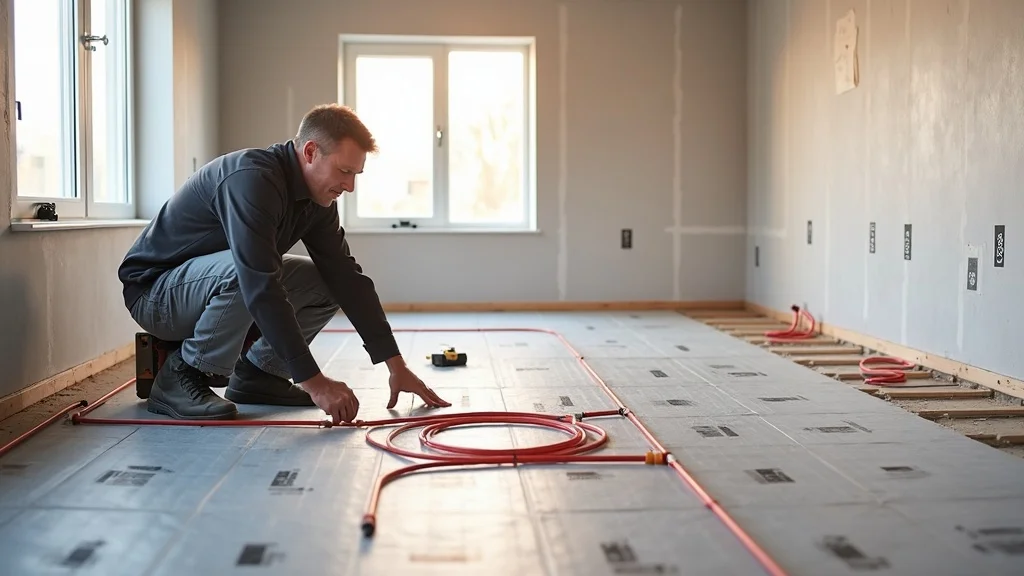
Installation varies depending on floor construction. For new builds on solid ground floors, layers typically include insulation, screed, and final floor finishes. This setup maximizes the thermal mass effect for efficient heat retention and distribution.
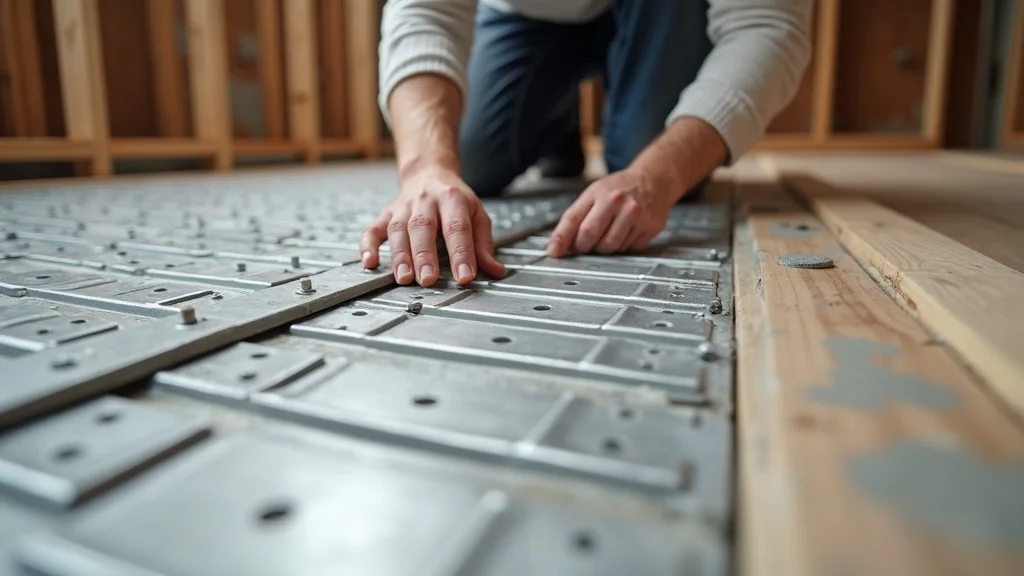
Retrofit installations in joisted floors use alternative methods such as aluminum heat spreader plates to distribute heat effectively. Although this method may require higher water temperatures to perform adequately, it offers homeowners the ability to upgrade existing homes without major structural changes.
Selecting the right floor finish is essential, as materials vary in thermal resistance. Options like timber, tiles, or laminate impact heat transfer rates and overall system effectiveness, factors carefully considered during installation planning.
7. Designing Underfloor Heating Systems: From Site Visit to Installation
Designing an underfloor heating system begins with a thorough site visit, assessing floor construction and constraints. For new builds or deep renovations, this often involves coordination with architects and builders to ensure the floor structure supports the system efficiently.
Heat loss calculations for each room determine wattage requirements, ensuring the system can maintain comfortable temperatures throughout the property. Jamie collaborates closely with suppliers to create detailed product layout drawings tailored to each project's specifics, from pipe routing to manifold positioning.
This meticulous design phase ensures installations meet performance expectations, providing clients with reliable, long-lasting heating solutions.

8. Managing System Controls and Zoning for Efficiency
Effective heating control is achieved by dividing the system into zones with individual thermostat settings. Manifolds distribute water through multiple loops, each serving different rooms or areas, allowing tailored heating levels.
Preventing unwanted heat transfer into non-target areas is managed by insulating pipe runs — a technique called traversing. Sleeving pipes with conduit reduces heat radiation along routes through heated rooms, so only designated spaces receive warmth.
Accurate placement of thermostats and control valves ensures efficiency and user comfort. This zoning approach minimizes energy waste and adapts heat delivery to occupants’ preferences.
9. Essential Tools and Equipment for Underfloor Heating Installers
Specialist tools enable efficient installation. Key equipment includes pipe decoilers that hold and dispense coiled piping safely and staple guns for securing pipes to insulation boards or heat-spreader plates. These tools streamline the laying process, reducing manual effort and installation time.
General plumbing tools are also necessary, but the underfloor heating trade-specific tools are modest investments. Jamie notes that while bulk buyers get better pricing, casual installers may hesitate to purchase specialized gear if only undertaking occasional jobs.
Ergonomic considerations, like managing knee strain from working on floors, are also part of the trade's realities. Installing underfloor heating is a physically demanding job, requiring durability and care.

10. Choosing Reliable Suppliers and Systems for Long-Term Success
Selecting dependable suppliers is essential for system performance and business reputation. Jamie trusts LK International, a Swedish manufacturer with over a century of experience in underfloor heating technology.
This longstanding partnership provides technical support and product reliability, crucial when managing a variety of projects and client demands. Jamie recalls that their support was vital when he started his own business, highlighting the role of supplier relationships in operational success.
Quality in materials and systems is non-negotiable, helping avoid callbacks, guaranteeing client satisfaction, and supporting seamless installations.

11. Handling Large Contracts and Working Away from Base
Managing multiple sites and large contracts requires organisation and adaptability. Jamie’s business often works on several projects simultaneously, sometimes far from base in Sheffield, with sites around the Cotswolds and Stratford-upon-Avon.
Work-life balance becomes a challenge due to travel demands. Jamie shares how family support and efficient scheduling — such as concentrating work to four days per week — help maintain wellbeing and job performance.
Embracing travel and remote working is part of the underfloor heating business lifestyle, requiring resilience and smart planning to deliver every project successfully.
12. Frequently Asked Questions About Running an Underfloor Heating Business
What are the main challenges in underfloor heating installation? Managing project schedules, ensuring technical accuracy, and balancing installation with emergency repairs.
How to price underfloor heating jobs competitively? Consider materials, labor time, project complexity, and local market rates to offer fair quotes without compromising quality.
What maintenance is required for underfloor heating systems? Generally minimal, but includes periodic checks of manifolds, pressure, and thermostatic control systems.
How to handle customer education and expectations? Clearly explain heat-up times, operating costs, and benefits of underfloor heating upfront to avoid misunderstandings.
Comparison of Underfloor Heating vs Radiators |
||
Feature |
Underfloor Heating |
Radiators |
|---|---|---|
Initial Cost |
Higher (Installation and materials) |
Lower (Simpler fit) |
Energy Efficiency |
Higher (Lower operating temperatures) |
Lower (Higher temperatures, heat loss) |
Heat-Up Time |
Longer (Thermal mass of floor) |
Shorter (Direct heating) |
Maintenance |
Low (Mostly system checks) |
Moderate (Bleeding, valves) |
Space Usage |
Minimal (No wall units) |
Wall-mounted units |
Conclusion: Key Takeaways for Success in the Underfloor Heating Business
Maintain manageable business size for quality control and customer satisfaction.
Leverage strong partnerships with reliable suppliers for technical and product support.
Continuously expand technical knowledge and adapt to market trends like heat pumps.
Balance workload efficiently, using downtime strategically, while safeguarding personal wellbeing.
Promote unique client benefits of underfloor heating clearly and confidently.
Jamie Alberts sums up, "Turning down work can be tough, but focusing on quality and manageable growth is what keeps our business thriving."
If you’re looking to deepen your expertise in the plumbing and heating industry, exploring related topics can provide valuable context and new strategies. For instance, understanding emergency repair protocols, such as those outlined in the Chesterfield burst pipe repair resource, can help you prepare for unexpected challenges and deliver even greater value to your clients. Expanding your knowledge in this way ensures your business remains resilient, adaptable, and ready to tackle both routine and complex projects with confidence.
People Also Ask
What are the benefits of underfloor heating over traditional radiators?
How do you start an underfloor heating business?
What tools are essential for underfloor heating installation?
Can underfloor heating work with heat pumps?
Call to Action
For expert help or advice, visit Peak Underfloor Heating and consult with Jamie Alberts and his team.
Sources: https://peakunderfloorheating.com/
To further enhance your understanding of running a successful underfloor heating business, consider exploring the following resources:
“Underfloor Heating Market Size, Share & Trends Report 2030”: This comprehensive analysis provides insights into market dynamics, including the growing preference for hydronic systems due to their energy efficiency and compatibility with various flooring materials. (grandviewresearch.com)
“Underfloor Heating Market | Global Market Analysis Report - 2035”: This report offers a detailed examination of the underfloor heating market across key countries, highlighting growth projections and technological advancements that can inform strategic business decisions. (futuremarketinsights.com)
By delving into these resources, you can gain valuable insights into market trends and strategies to effectively navigate the underfloor heating industry.












Write A Comment